Wednesday, August 6, 2008

Vineyards and Villages II


Mikulov


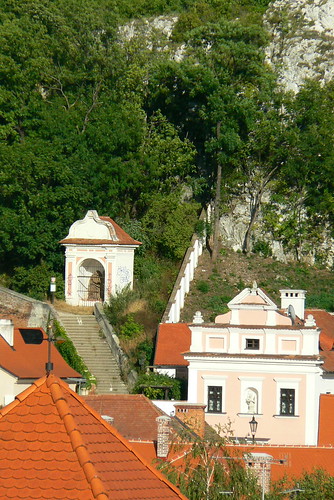
A little piece of the Mediterranean must have broken off during the creation of the world and fallen into Southern Moravia. I really had to check the GPS to make sure we hadn't accidentally driven to Croatia instead of the quaint town of Mikulov.

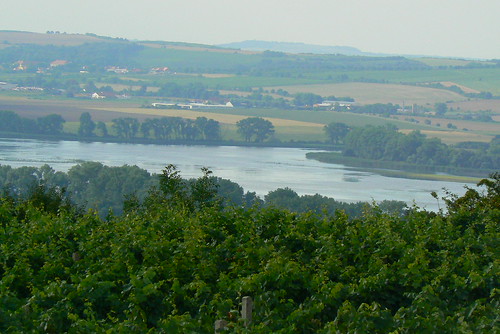
Mikulov sits on a hillside bordered by white rock face on one side and hearty green vineyards sprawling as far as the eye can see on the other side. Most of the buildings have been renovated recently with bright colors of yellow, brick red and blue adding to the quaintness. We had dinner on the main square, where a local band was playing toe-tapping folk tunes.


Valtice

After dinner we took a drive in the cool evening air. Through the vineyards, the road ribboned and brought us to the village of Valtice, wine capital of the Czech Republic. The square was large. People were walking slowly across. Grandparents holding toddlers, a group of teens with green and pink hair. A few tables sat outside a restaurant where the merry laughter of wine drinkers filled the air. Of course the standard chateau loomed on the horizon.

I loved little Valtice so much that the next day before driving back to the big urban Prague I asked H. to stop one more to and let me take a little "souvenir or two" back with us. The wine cellar at the chateau was excellent and I found lovely souvenirs to remind me of our weekend in the sun of southern Moravia.

www.mikulov.cz/en/?languageId=1

www.radnice-valtice.cz

Vineyards and Villages I


The Battle of Three Emperors

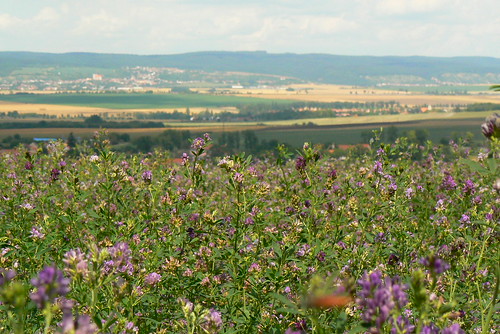
Tucked into the hills of the south of the Czech Republic is a field of purple flowers. If one doesn't know better than the field would appear to be like any other picturesque scene in Moravia. However, two hundred years ago this field was covered with bright red and blue uniforms of French, Russian and Austrian troops.

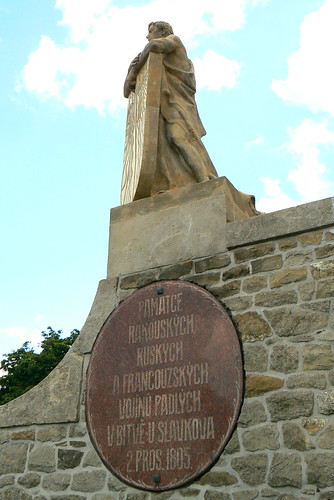
Napoleon met his enemies on this purple-flower field. Tolstoy wrote of this battle in War and Peace. If I'm honest, I was ignorant of the battle and its significance before our little journey to this stone monument. But after standing and gazing and the blowing flowers, imagining the young men sweating, scratching in their uniforms, the fear and dread in their eyes and hearts, I felt a new connection to a history that is not mine but has captured my imagination.

http://en.wikipedia.org/wiki/Battle_of_Austerlitz


Lednice

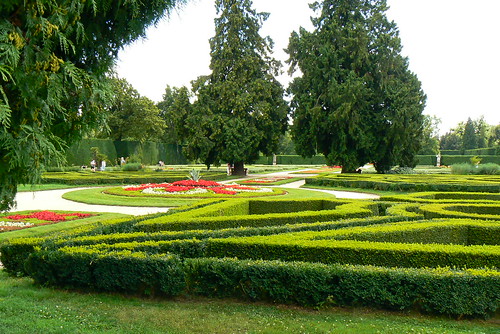
Last time I was at Lednice Castle, it nearly broke my heart. Not because of its beautifully sculpted gardens or its deep emerald lake or the sprawling trees and wild flowers. No, it broke my heart to see the castle, literally, crumbling where it stood. We passed by Lednice in the fall of 2006. It looked as if it hadn't been maintained since it was built in the 17th century.

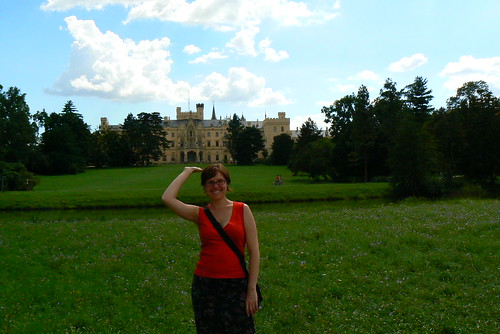
However, on our latest trip to Southern Moravia last weekend we stopped back by Lednice and to my delight it was evident that reconstruction has begun and is moving swiftly to restore this castle to its glory.

The other surprise for me was how many visitors there were strolling throughout the massive gardens. The weather was quite warm and very sunny. It appeared that anyone that lived in a 20 km radius must have decided to wait out the heat at Lednice. The Lichtenstein landowners spared no money or extravagance in their garden designs. There is even a Turkish minaret imported directly from Turkey to accentuate the extravagance.

After a long (long, long, long, long....) walk around the gardens it was time to beat the heat in our own way and drive off to find a cold shower and chilled wine.


www.zamek-lednice.info/en/


Saturday, August 2, 2008

Tanky

Tanks. This is not the subject one would expect from me but I've always loved history and am really interested in military history. History is written by the winners, after all. So when H. proposed we spend a Saturday (not the first time) at the Czech Military Museum I was all for it.

The museum is mostly outdoor. When you enter the complex, there are 5 long exposition halls that are divided by time periods: WWI, WWII, and Cold War. Each hall is arranged to show how military vehicles would have been utilized in their time period.

There is also a hall that recreates a large tank battle that happened in 1945 in the eastern Czech town of Ostrava. There is a trench that runs about 60 meters through the dark hall. Above you there is the sound of gun shots, whizzing grenades and incoming artillery fire. You feel like you've experienced a little of the battle for yourself.

Outside there is a long line of tanks with their details on small plaques with details of when the tank was produced, by who, when it was in use and any special facts to draw attention. I was awestruck at the number of things inventors have come up with to do with a tank. There were tanks that could dig trenches, amphibious tanks, tanks to assist with domestic tragedies such as floods and even a tank that could become a temporary bridge.

There was a time in life when I thought I might want to become a war correspondent. I think my hours at the military museum was all the action I'll be seeing for awhile.

www.vhu.cz